The City requested a comprehensive review of the sufficiency of water, sewer, and reclaimed water user rates to provide revenue for operations and capital improvements. As the City is engaging in a significant sewer capital upgrade and reinvestment program over the next few years which will require a focus on obtaining funding for the projects and setting the rates to support the capital program and potential new debt service payments. Raftelis Financial Consultants conducted the study with close support and cooperation by the City’s staff and engineering consultants. This presentation will discuss the development of the study, results and recommendations to the City and Commission.
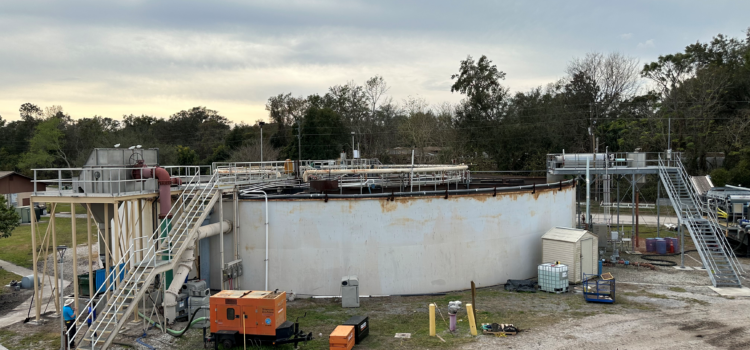
Water and Wastewater Rate Study
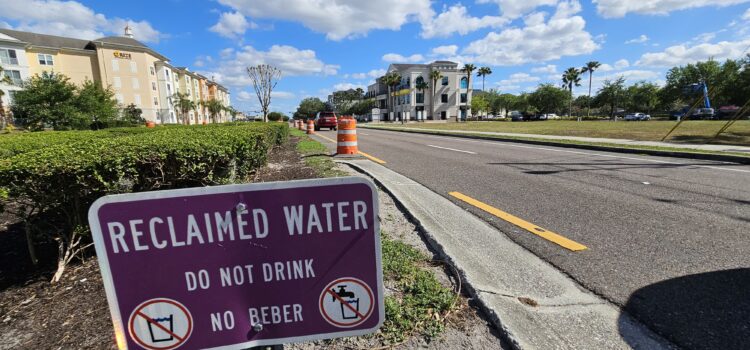
Reclaimed Water System: Low Pressure
Recently, the RCW (reclaimed water system) has experienced service pressure issues and low pressure has been experienced by some City residents. Florida’s weather pattern typically experiences increased temperatures in the March or April months and the consistent summer rains start between May and June. This year, the consistent summer rains typically experienced between May and June, have not occurred. The result is warmer, dryer conditions and increased RCW demand for landscape irrigation.
The City’s RCW system has a finite amount of water available every day. This is due to the water reclamation facilities treating the amount of wastewater that is received. During these few days, if the RCW demand exceeds the amount of wastewater received, there is a water volume deficit. To mitigate the effects, RCW water is pumped from where water is available to where it is needed during non-irrigation (daylight) hours. During this process, some customers may experience lower than normal RCW pressures. In some instances, it has required a longer time frame than the non-irrigation hours in order to transfer a sufficient volume of RCW water for the anticipated RCW demand. However, RCW has typically been available during permitted (night time) irrigation hours. The extra effort to mitigate the effects will likely continue until the more typical summer rains return and RCW irrigation demand subsides.
Until normal rains return, all customers can do their part to support the RCW system. During this time of year, irrigation is permitted two days per week during nighttime hours as posted on the City’s website. Customers can minimize the amount of time per irrigation zone, which reduces demand and saves money on their utility bill. Rain sensors installed on irrigation systems detect when rain has occurred and will delay irrigation when it is not needed. These efforts by everyone conserves precious water resources for customers and the environment.
We are continuing to work on a few improvements that may help with the pressure.
| Time of the Year | Odd-Numbered Addressor No Address | Even-Numbered Address | Nonresidential Properties |
| Daylight Saving Time | Wednesday/Saturday | Thursday/Sunday | Tuesday/Friday |
| Eastern Standard Time | Saturday | Sunday | Tuesday |
- NO water is allowed between 10:00 a.m. and 4:00 p.m. on any day
- Water only when neededWater for no more than one hour per zone
- Restrictions apply to private wells and pumps, ground or surface water, and water from public and private utilities
These rules apply if you are using potable water or a private well for irrigation. If you have reclaimed water for irrigation, then you may water two days per week year-round.
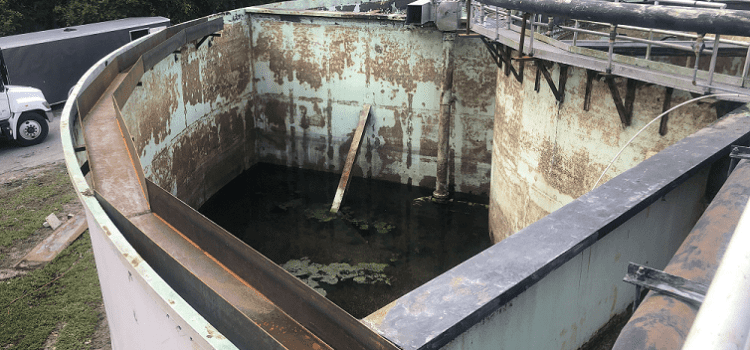
Wastewater Management Challenges and Financial Implications in Winter Springs: A Summary Report
The ongoing maintenance costs of the aging plants underscore the urgency of the reconstruction project. To ensure the responsible allocation of taxpayer funds, we must provide complete transparency regarding the financial aspects of the project. Regular updates on the budget, expenditure breakdowns, and timeline will be made available to the public as they become available to me. It is imperative that residents understand the reasons behind the escalating costs and the projected financial impact throughout the reconstruction process.
This summary report provides a comprehensive overview of the wastewater management challenges faced by Winter Springs during the fiscal years 2022 and 2023. It highlights significant factors such as increases in flow and loading, construction period extension, rising chemical costs, and inflationary impacts. The report presents a breakdown of the financial implications for each fiscal year, including costs due from prior periods and the projected costs for FY 2023.
Winter Springs deserves a modern and efficient wastewater management system. As a city commissioner, I will continue to work tirelessly to address the legacy of deferred maintenance, ensuring that the rebuilding process remains transparent, accountable, and responsive to the needs of our community. Together, we can navigate these challenges, laying the foundation for a sustainable future while providing residents with reliable and environmentally conscious wastewater services.
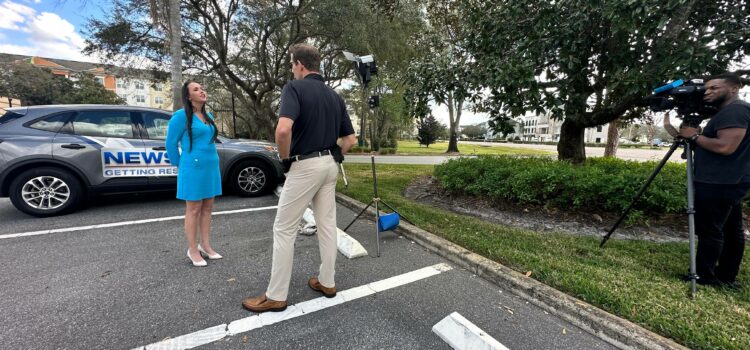
State Lawmakers Order Audit of Winter Springs Over Water Treatment, Sewage Spills, Public Records
By: Martin E. Comas
ORLANDO SENTINEL, January 31, 2023 /orlandosentinel.com/ —
At the urging of state Sen. Jason Brodeur, Florida lawmakers ordered an audit of Winter Springs after residents have long raised concerns about the operation of the city’s water and wastewater systems, a massive sewage spill into a neighborhood pond and allegations of public documents being withheld.
But recently elected Mayor Kevin McCann called the allegations a political witch hunt and blasted members of the state Legislature’s Joint Legislative Auditing Committee for not alerting city leaders of the probe.
“These are paid political operatives that are putting this stuff forward,” McCann said last week during the committee hearing in Tallahassee. “We’re financially sound, and they won’t find anything here. … This is a pure weaponizing of this committee.”
Brodeur, who grew up in Winter Springs, said nearly all the complaints he receives from residents in his district pertain to Winter Springs’ operations in City Hall. An operational audit conducted by the state’s auditor general over the next several months, Brodeur said, would take a hard look at the Seminole County city.
“With a city of 38,000 people, clearly everything is personal,” said Brodeur, a Republican from Sanford. “Everyone knows everyone. So all I would like … is to have a third party, independent audit, say: ‘What are they doing? Are the contracts kosher?’ … I just want to get to the bottom of it. If some of this stuff is untrue, I want to say that an independent, third party came in and we looked at it, and it’s not true. So go pound sand. But if it is true, we want a corrective action plan.”
Before voting unanimously for the audit, committee members said the probe could take up to 18 months to complete.
Irritated, McCann pointed out that the audit’s completion would be timed as the city’s 2024 election season begins to heat up, giving political fuel to his opponents.
State Sen. Jason Pizzo, the committee’s chair, shot back at McCann during the contentious hearing, saying he aims to have the audit completed quickly and it is not political.
“If somebody is screwing with you, and this is a vendetta, we’re going to find out,” said Pizzo, a Democrat from North Miami Beach. “If somebody is out to get you, I’ll get ‘em. You understand what I’m saying? If you have larceny in your heart, you’re going to hate me. If you don’t, you’re going to love me. … I’m really a fair person.”
The audit would take a look at Winter Springs’ contract with Veolia Water North America for its water and wastewater operations, and whether the city is complying with its state-issued water consumptive use permit.
It also would examine the city’s policies on public records requests, and whether officials are complying with Florida’s Sunshine Law.
The audit also would evaluate the city’s ethics and fraud policies and Winter Springs’ code of conduct.
The auditor general does not have enforcement authority, Pizzo said. Rather, it can refer its findings to the State Attorney’s Office, the Florida Department of Law Enforcement or the state’s ethics committee.
In 2011, Winter Springs launched construction of a reclaimed water plant for $3.5 million. Two years later, it approved $6.3 million in upgrades to its potable water system. The city is currently replacing its aging wastewater plants at a cost of over $70 million.
Then, in 2019, Winter Springs contracted with Veolia to manage the city’s water, wastewater, stormwater and reclaimed water services after several sewage spills into water bodies and high levels of chlorine were detected in the drinking water.
“They tried to ram it through,” Brodeur said of the Veolia contract.
Winter Springs officials said at the time that Veolia is an international company with experience in managing and operating public water systems that would do a better job than the city’s short-staffed public works department.
In January 2021, a faulty valve caused up to 15,000 gallons of partially treated sewage to flow into a stormwater pond, killing hundreds of fish and causing a stink that lasted for weeks, according to the committee’s report.
The spillage led to the state’s Department of Environmental Regulation sending the city a warning letter that threatened Winter Springs with tens of thousands of dollars in fines if it did not comply with repairing its systems.
According to the state committee’s report, residents urging for the audit said city officials are underestimating the costs of replacing the water systems and are not being transparent in providing information.
Brodeur, as an example, noted that a city resident recently made a public records request regarding the costs of replacing the water treatment plant.
“He was told that it would be over $1,000 to answer his public records request,” Brodeur said to the legislative committee. “So somebody knows something, and doesn’t want anyone else to know.”
Brodeur pointed out that over the last three years, Winter Springs has lost a city manager, two police chiefs, a city clerk, two finance directors, two parks directors, two public works directors, three community development directors and two city engineers.
McCann was named mayor by Winter Springs commissioners in April 2021 after Charles Lacey, who served in that role for about a decade, resigned amid policy differences with other commissioners.
McCann was elected in the November general election, defeating candidates Mark Caruso and Brandon Morrisey.
At Thursday’s state committee hearing, McCann called the allegations “overwhelmingly, factually inaccurate” and said his city will comply with the audit.
“I am the new guy, and this is a bit overwhelming,” he said.
Jesse Phillips, president of the Winter Springs Community Association, which asked for the state probe, said in a written statement that his organization welcomed the audit and urged city officials to comply.
“The issues facing our city necessitate an independent review,” he said. “We need to stop the finger pointing and to understand how we got here and to find solutions to fix the problems affecting our health and livelihoods.”


